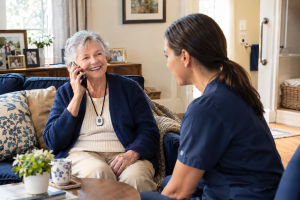
Ensuring senior safety at home is more important than ever in 2026. Friendly reassurance services provide crucial emotional support and peace of mind, greatly reducing risks and promoting wellness for older adults. This article explores how these compassionate services help seniors remain safe, confident, and independent in their own homes.
Understanding Friendly Reassurance Services
Friendly reassurance services are uniquely designed to provide seniors with consistent, compassionate human contact, focused on their emotional well-being and safety at home. Unlike traditional caregiving services, which may primarily involve helping with daily routines like bathing, grooming, or administering medication, friendly reassurance services are centered on regular, meaningful check-ins and fostering a trusting relationship. These interactions often occur through scheduled phone calls, video calls, or, at times, brief in-person visits. The heart of these services is the genuine social interaction and companionship they provide, supporting seniors’ mental health and giving families peace of mind.
Every interaction in friendly reassurance services is an opportunity to connect and assess the senior’s well-being. While a caregiver may only visit a few times per week, reassurance programs frequently offer daily or near-daily contact. The contact is usually brief but purposeful, focusing on a warm greeting, casual conversation, and a few gentle questions about the senior’s mood, sleep, appetite, and general routine. Since these services foster ongoing, low-pressure relationships, seniors often find it easier to share concerns or simply enjoy the company, reducing the emotional burdens of living alone.
A key aspect distinguishing these services from traditional caregiving is the proactive routine of check-ins designed to spot subtle changes before they escalate. For example, after a hospitalization, a senior may return home weakened, with family members worried about complications, medication confusion, or loneliness. A daily reassurance call during the first few weeks can provide invaluable support, helping the senior feel watched over while giving loved ones real-time updates on recovery. Similarly, when family members are traveling or live far away, regular check-ins bridge the emotional distance and ensure someone is monitoring the senior’s well-being.
There are many scenarios where friendly reassurance services make a significant difference. Consider an older adult who recently lost a spouse and now lives alone; the transition can be fraught with grief and anxiety, and regular reassurance calls or visits keep them socially engaged, helping guard against depression and isolation. For those with mild cognitive impairment, these services provide continuity, helping anchor them in daily routines and allowing early detection of confusion or forgetfulness. Seniors with chronic illnesses, but whose conditions don’t yet require extensive hands-on care, benefit from the monitoring and social engagement reassurance services offer, promoting independence while staying safe.
The demand for friendly reassurance services in 2026 reflects demographic trends and the increasing desire among seniors to remain in their own homes for as long as possible. As society becomes more aware of the risks of social isolation and as more families are separated by distance or obligations, these services are stepping in to fill an important gap. By combining compassionate communication, frequent monitoring, and proactive attention to emotional needs, friendly reassurance services have become a cornerstone of modern aging-in-place strategies, valued not as a substitute for care but as a vital complement to it.
How Reassurance Services Reduce Risks and Boost Well-Being
Consistent friendly reassurance services do far more than simply offer peace of mind; they fundamentally strengthen senior safety by providing early detection, preventative support, and holistic well-being. Through regular outreach, trained reassurance specialists establish a sense of continuity and trust, allowing subtle changes in seniors’ behaviors or routines to be noticed rapidly. For example, if a senior expresses confusion, forgetfulness, or seems uncharacteristically withdrawn during a scheduled call, the reassurance professional is often the first to recognize these red flags. Their attentive listening and familiarity with each individual’s usual demeanor can reveal warning signs of health issues such as infections, emerging depression, or cognitive decline—concerns that frequently go unnoticed in the absence of routine contact. Timely identification enables families or professional caregivers to intervene swiftly, reducing the risk of escalation into crises or emergency hospitalizations.
Regular friendly contact provides an essential safeguard against the dangers of isolation. Seniors living alone or at risk of loneliness are more susceptible to health deterioration, with research consistently linking social isolation to increased rates of falls, medication non-adherence, and rapid physical or cognitive decline. Reassurance services directly address this vulnerability by fostering meaningful, low-pressure connections that counteract loneliness and encourage seniors to maintain their routines. For instance, a reassurance specialist may gently remind a client about medication schedules, hydration, or upcoming appointments, effectively boosting adherence and preventing potentially serious oversights. Their encouragement can also support seniors in remaining active, stimulating both mental sharpness and physical mobility—two key factors in reducing fall risk.
Various studies paint a compelling picture: seniors receiving reassurance services experience fewer emergency incidents and higher compliance with routines. A 2024 study published in the Journal of Geriatric Care found that older adults participating in daily reassurance check-ins had a 35% lower rate of emergency room visits due to preventable incidents, compared to peers without such support. Another nationwide survey by the Aging-in-Place Research Institute reported that seniors with regular emotional support had significantly better self-reported well-being, including improved mood, greater feelings of safety, and higher satisfaction with their ability to remain independent at home.
Crucially, the emotional bond and stability provided by reassurance services serve as both a preventive safety layer and a foundation for healing. Reassurance professionals are uniquely positioned to notice escalating anxiety or drops in motivation—subtle psychological shifts that often precede physical symptoms. By offering empathy, validation, and encouragement, they help seniors navigate challenges, cope with setbacks, and maintain a proactive stance toward health management.
In sum, friendly reassurance services bridge the gap between social support and health security. They enable early intervention against health threats, foster better compliance with wellness routines, and cultivate a nurturing environment that measurably reduces risks. This powerful blend of emotional and practical support transforms safety from a passive state into an ongoing, collaborative process centered on each senior’s dignity, resilience, and well-being.
Integrating Friendly Reassurance into Personalized Home Care Plans
Integrating friendly reassurance services into personalized home care plans begins with a thorough assessment of each senior’s unique lifestyle, preferences, and risk profile. Care providers conduct detailed interviews and collaborate with family members, health professionals, and the senior themselves to understand not just their medical needs, but also their daily routines, social connections, and emotional triggers. The goal is to weave reassurance seamlessly into the fabric of each individual’s life, offering support that feels natural, respectful, and empowering.
Best practice starts with setting clear preferences for communication: some older adults may respond best to daily phone calls at certain times, while others value text messages, video chats, or even gentle reminder devices. Frequency of check-ins is determined with input from the entire care circle—including family, professional caregivers, and reassurance service specialists—balancing safety with the senior’s desire for independence. For example, a senior managing chronic health concerns might prefer two check-ins a day, while someone who is more self-sufficient may choose every other day or weekly contact.
To ensure integration, reassurance specialists often coordinate closely with other home care providers. This collaboration facilitates information sharing: a professional caregiver onsite may notice subtle shifts in mood or mobility, which can be swiftly communicated to those managing the reassurance schedule. In turn, reassurance services may alert care teams to skipped medications, changes in routine, or even hints of social withdrawal, creating early opportunities for intervention before risks escalate. Families are kept in the loop through shared notes or app-based updates, providing peace of mind and minimizing duplication of efforts.
Personalized reassurance also accounts for cultural background, personality, and living circumstances. For example, a widow who enjoys reminiscing might be paired with a reassurance caller who shares her interests or speaks her native language, fostering trust and reducing feelings of vulnerability. In another case, a tech-savvy senior could be offered automated check-in calls that prompt a quick response—ideal for those who value efficiency but still benefit from human oversight.
Affordability and flexibility are two key reasons reassurance services have become a cornerstone of home safety for older adults. Many organizations offer scalable options, from brief daily calls to comprehensive social engagement programs, making them accessible to a wide range of budgets. As an added advantage, reassurance plans can usually be modified quickly without the delays or expenses accompanying major care plan overhauls. This adaptability is vital because a senior’s capacity and safety needs may change suddenly due to illness, injury, or changes in living arrangements.
Ongoing evaluation underpins the entire process. Care teams routinely review call reports, gather feedback from clients and families, and assess outcomes such as emergency room visits or changes in mood and activity. These insights drive adjustments in check-in schedules, escalation protocols, and the balance between virtual and in-person support, ensuring the plan always reflects the senior’s current reality and supports dignified, safe aging-in-place.
Conclusions
Friendly reassurance services are a powerful ally for senior safety. By fostering emotional well-being, prompt attention to changes, and strong connections, they help seniors remain secure, healthy, and independent at home. Integrating these services into a client-centered care plan offers both peace of mind and concrete safety benefits, proving vital for confident aging-in-place.